A jacket for a ten-minute walk from the station may need to pack small; one for a long wet hike needs to keep working as the rain continues. The right outer layer depends on how long you will be exposed, how hard you will be moving and what you want to wear underneath.
Water-resistant or waterproof?
A surface finish that makes drops bead up is useful, but it is not the same as waterproof construction. Look for the manufacturer's waterproof specification and sealed seams. The shell range at Arc'teryx includes waterproof shells as well as weather-resistant softshells and lightweight windshells. Choose the appropriate category for the rain you expect. For example, Marmot describes its PreCip Eco as waterproof and fully seam-taped, a useful feature to check if you want protection across stitched joins.
Try it on with the layers you will wear
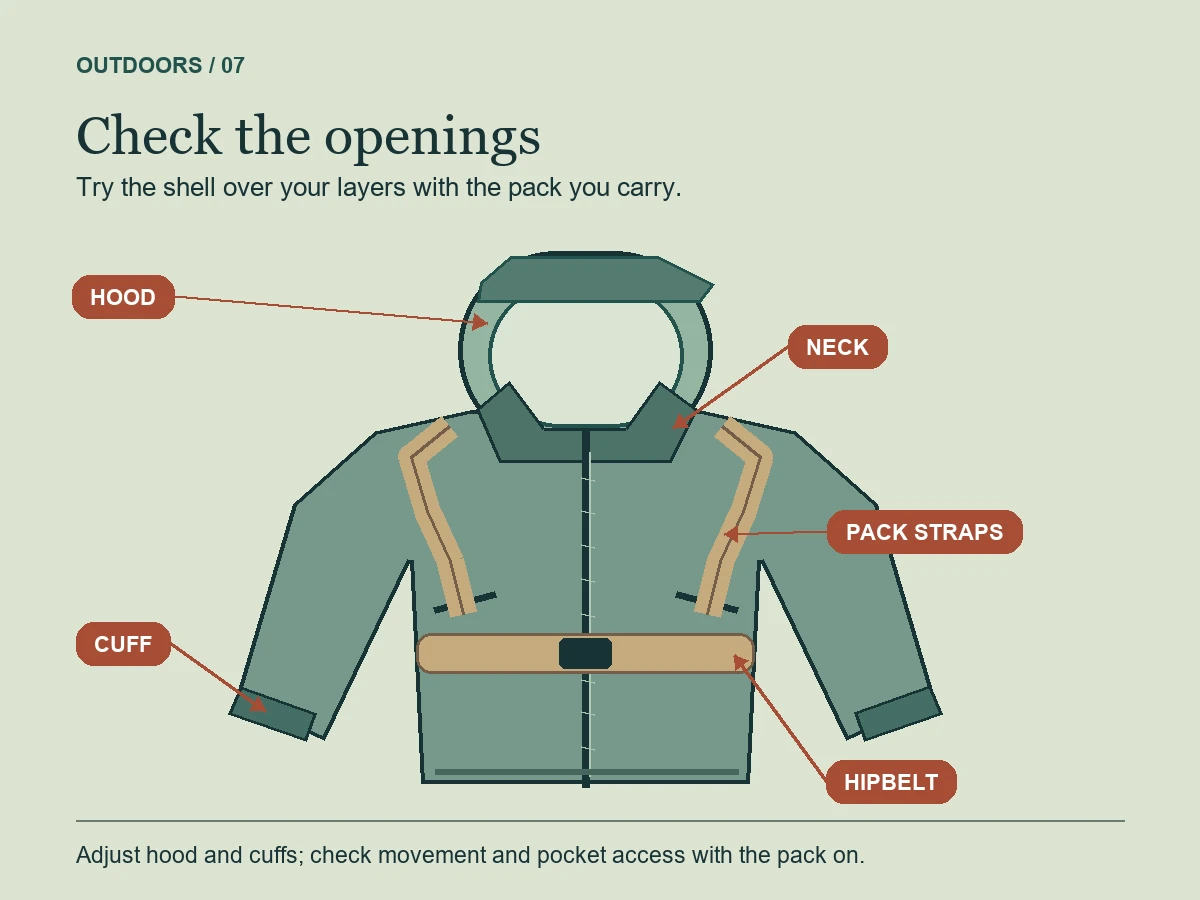
Put the jacket over your usual fleece or sweater and reach forward, raise your arms and turn your head. Can you see to the side with the hood adjusted? Is there room at the shoulders without too much spare material around the cuffs? Check pocket location if you wear a backpack or hip belt. The Foray 3L rain jacket from Outdoor Research lists a fully adjustable hood and zippered chest and hand pockets. Helly Hansen includes underarm ventilation zippers in its UK women’s Loke Jacket 2.0, a practical detail when you warm up during a walk.
Consider how the shell fits into the rest of your wardrobe. An uninsulated outer layer keeps the layering decision flexible: add a warmer layer on cold days or wear less underneath in mild weather. Check the garment's care instructions and compare its weight and packed size if it will normally live in your bag. Choose the configuration you will want to carry, rather than the one with the longest feature list.