A case that fits your first flight can be too big for a connection. Before luggage shopping, find the baggage rules for every flight on your itinerary. Write down the number of bags included, the maximum dimensions and the weight allowance for each one.
Write down the tightest allowance
Identify the airline operating each flight and check the rules for your actual fare. Distinguish an under-seat personal item from an overhead-bin case; the fare might not include both. The IATA passenger guidance confirms that limits can differ by airline, cabin and aircraft. When comparing wheeled cases at Samsonite, check the measurements in the product specifications against your airline’s own rules. Use the tightest limit to narrow the selection.
Compare the bag from the outside
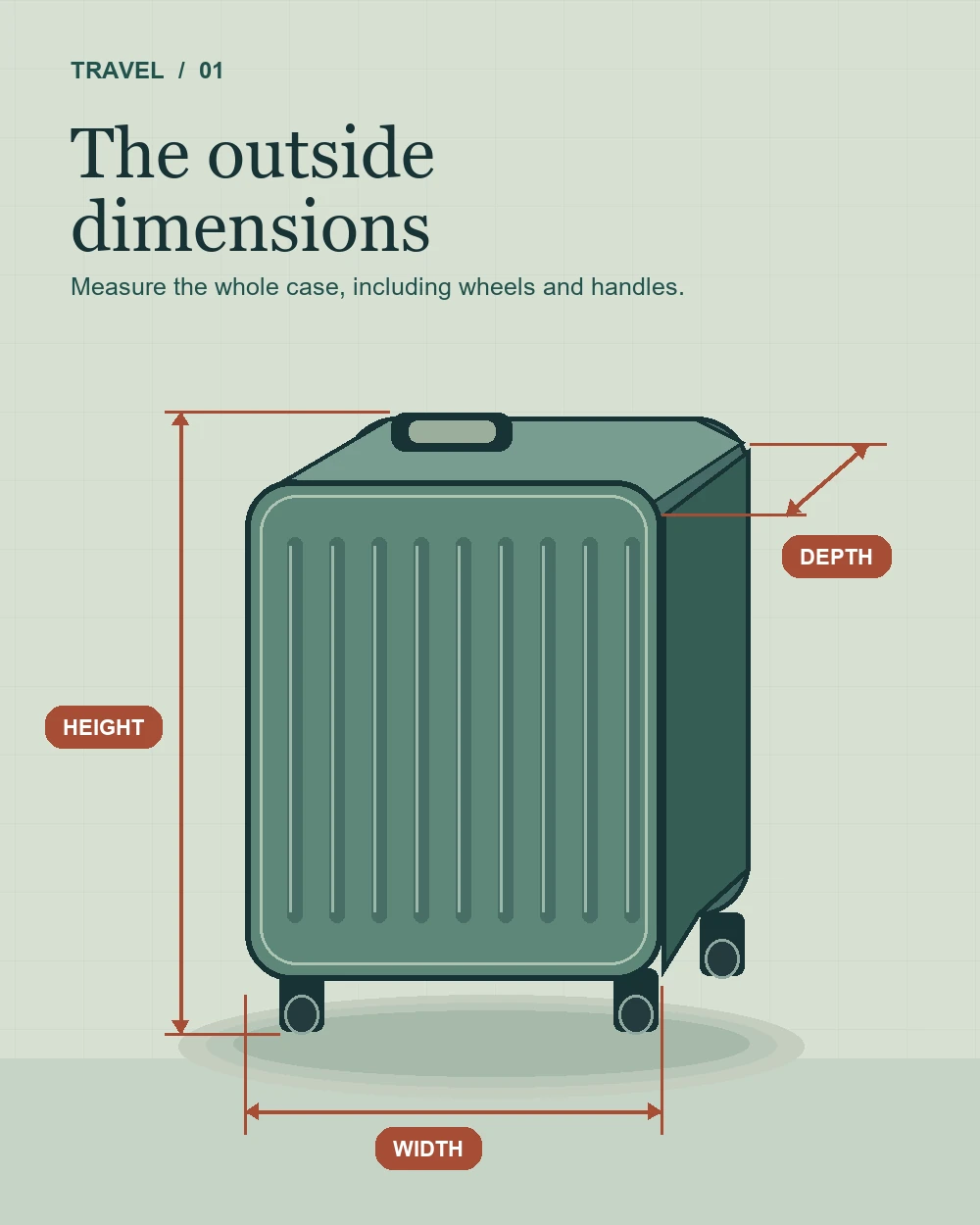
Measure from the farthest points, including wheels, fixed handles and pockets. A Travelpro case listing distinguishes between the case body and the entire bag: it’s the overall figure that matters at the airport. The Coast Blue Carry-On at Away, for example, lists exterior dimensions of 22 × 14.4 × 9.1 inches including wheels and handles. A ticket allowing 22 × 14 × 9 inches would set a smaller limit on two sides. For a soft CabinZero backpack, check the weight and outside dimensions, including the extra depth from stuffed front pockets.
Pack a trial load with the clothes, shoes and electronics you plan to take, then weigh and remeasure the complete bag. An expansion zip can be handy for a road trip, but leave it closed if the expanded depth exceeds your flight’s allowance. A bag that fits with a little capacity to spare gives you room for a souvenir without reconsidering your luggage at the gate.