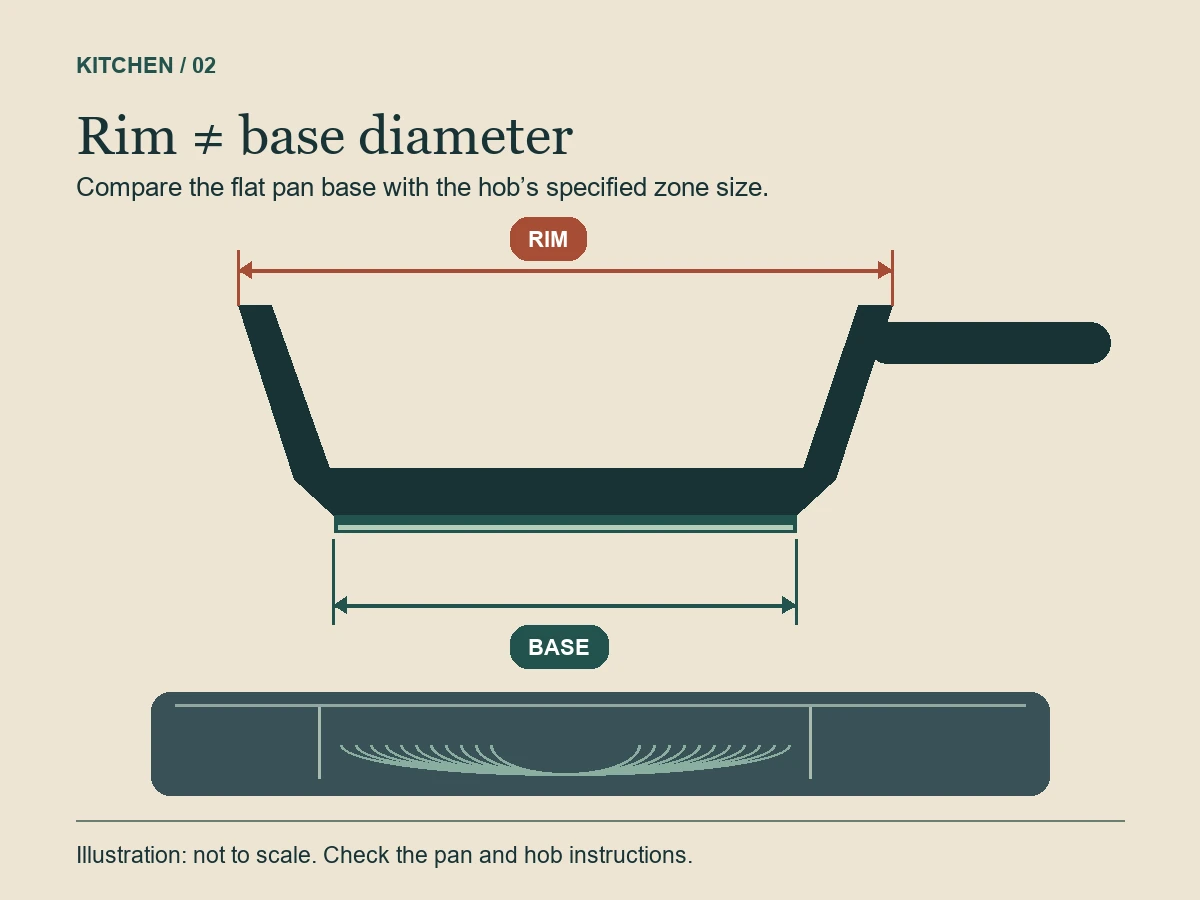
Start with the skillet you already own when switching to induction. The smooth glass cooking surface calls for compatible cookware, but you may be able to keep many of the pieces in your cupboard. A magnet and a tape measure are useful tools before you shop.
Check the bottom, not the name of the metal
Hold a magnet against the underside of the cool pan. A strong attraction to the base is a promising sign, but check your cooktop's instructions and the cookware specification as well. Some aluminum pans have a magnetic steel base, and other cookware naturally uses magnetic material. Compare cast-iron skillets such as those from Le Creuset with the induction-ready ceramic nonstick frying pans at GreenPan. Confirm the specification for the exact pan rather than relying on its material name.
Measure the surface that touches the hob
Check the minimum and recommended pan sizes in your cooktop's manual. The top of a frying pan is often wider than its flat base if the sides slope. GE Appliances explains that the relevant diameter is the flat magnetic area on the underside. Measure that area; a pan that is too small may not be detected by the ring. A flat base that sits evenly on the glass is important too.
For searing or browning, explore the stainless steel options in ZWILLING's induction pan range or All-Clad's D3 Stainless Everyday collection, which uses a magnetic stainless exterior. A nonstick skillet can be a useful choice for delicate foods. Compare handle length, weight, oven limitations and care instructions, especially if you lift the pan frequently. If you already have a compatible skillet for one of your rings, measure it and pick up only the size or cooking surface that you still need.